The “Big Burn” of 1910 was a massive forest fire that devastated large portions of northern Idaho and western Montana. Not only did the fire create a great loss of marketable timber that was the economic basis of the region, it burned towns, took many lives, and left hundreds of families burned out of their homes and farms. Local communities that were especially affected by the fires and where dozens of families were left without a home or livelihood were Cabinet, Sagle, and Priest River.

Thomas Krainz, PhD - DePaul University

Thomas Krainz, PhD - Associate Professor of History, DePaul University

On Thursday, December 8, Thomas Krainz will speak about how communities in this region cared for refugees from the fires. While Krainz will focus especially on how Missoula and Spokane responded to the crisis, he is also researching the scope of the refugee situation in Bonner County and the way in which local communities helped those displaced by the fires.

Krainz is an associate professor of history at DePaul University in Chicago and the author of Delivering Aid: Implementing Progressive Era Welfare in the American West. He is currently conducting research for a book on how local communities, including state and federal agencies, responded to refugees in the American West in the early twentieth century. The massive 1910 forest fire known as the “Big Burn” is one of the case studies he is using to understand how receiving communities cared for refugees.

On December 8, Krainz will speak at 1:00 pm at the Sandpoint Community Hall. That evening, he will speak at 6:00 pm at the Sagle Senior Center at 650 Monarch Road in Sagle.  Both presentations are free and open to the public.

The presentations are sponsored by the Bonner County Historical Society & Museum. Co-sponsors of the event are the Idaho Humanities Council, DePaul University, City of Sandpoint, Sagle Senior Center, and the Co-Op Country Store.

For additional information, call the Museum at 263-2344.

Veterans Day – 11/11/11

November 11, 2011

On Veteran’s Day, we remember the Bonner County men who gave their lives in service to their country during World War I and II.

Sandpoint- Area businesses and residents are invited to join the Greater Sandpoint Chamber of Commerce from 5:00pm – 6:30pm, Wednesday June 29 for a Business After Hours of networking and “exploring Inland Northwest” history.
replica of cedar plank canoe made by North West Company agent, David Thompson

"Canoes For The Journey: David Thompson at Boat Encampment in 1811"

Hosted by the Bonner County Historical Museum, “Explore Your History” will be the theme for the evening’s get together. The museum is commemorating the 200th anniversary of the fur trader David Thompson’s historic journey from the Canadian Rockies to the Pacific Ocean, allowing him to make the first complete map of the Columbia River drainage.

Come see the exhibit “Canoes for the Journey: David Thompson at Boat Encampment in 1811” which includes a full-size replica of the canoe that Thompson designed for his historic journey. The museum will be serving wine, delicious appetizers, and desserts cooked in traditional outdoor dutch ovens. Look through the museum for answers to trivia questions. Correct answers will earn chances to win several outdoor themed door prizes.

Dutch OvenFor more information, please contact the Bonner County Historical Society at 208 263-2344 or bcmuseum(AT)frontier.com.


The City of Clark Fork welcomed the 2011 David Thompson Columbia Brigade today at Jay White’s lagoon on a fast running Clark Fork River.

 
2011 David Thompson Columbia Brigade
Arriving at the town of Clark Fork
2011 David Thompson Columbia Brigade

Waiting for "permission" to land


2011 David Thompson Columbia Brigade

The Brigade is greeted by Clark Fork


2011 David Thompson Columbia Brigade

The Brigade being "piped" through Clark Fork to the Veterans Memorial Field where they camped.

U.S. David Thompson Bicentennials, Inc.Teachers in Idaho, Montana, and Washington states have a wonderful opportunity to learn more about the fur trade history of the Inland Northwest and earn continuing education credit at a workshop in Kettle Falls, Washington on Sunday, June 19.

This one-day workshop utilizes historic documents and materials to explore the human and natural landscape that we see around the region today, and provides specific examples of how David Thompson’s story can be incorporated into the math, language, history, and science curriculum at all levels of elementary and secondary school.

Sessions and topics include:

  • “The World Of 1811″
  • The Historical Context of Thompson’s Arrival at Kettle Falls
  • David Thompson and the Fur Trade Traveling Trunks
  • Boats of the Fur Trade: Boat Building and Use
  • Navigation and Mapping
  • A Guided Walk of Mission Point with Author, Jack Nisbet
  • Tour of the Kettle Falls Historical Center
  • Geology
  • Late Afternoon/Evening Canoe Paddle on the Columbia River

All workshop materials, lunch, dinner, and the evening canoe paddle are included in the cost of registration. The fee for early registration by June 3 is $60.00.  After June 3, late registrations can be accepted until the workshop fills at a cost of $85.00. Education credit fees are separate from the cost of the workshop. Sponsors of the workshop are the National Park Service, U.S. David Thompson Bicentennials, and Kettle Falls School District.

Download the registration form and more information here.

Ever wonder what daily life was like in Sandpoint more than a hundred years ago?

Archaeologists contracted by the Idaho Transportation Department and SWCA Environmental have been working on the answers to that question over the past few years and will share some of what they’ve learned in two Idaho Archaeology Month presentations at the Sandpoint Community Hall on May 19 and 26. The presentations are free and open to the public, but donations to the Historical Society will be gratefully accepted at the door to help cover expenses.

On Thursday, May 19,  at 7:00 P.M., Robert Betts of Vanguard Research will present “From Time Immemorial: Sand Creek and the Prehistory of Sandpoint, Idaho.”  The Sand Creek Byway archaeological excavations of the historic Sandpoint townsite involved ten sessions of field work over a period of three years and is the largest archaeological project ever undertaken by the State of Idaho.  Close to 570,000 artifacts were recovered.  Artifact analysis and report preparation is currently under way at the University of Idaho.  While excavation focused on recovery of artifacts associated with the early Sandpoint townsite, a small number of prehistoric artifacts were also recovered that reflect Native American activity at the mouth of Sand Creek that preceded the establishment of the early townsite by thousands of years.

Robert Betts was involved in all three years of the Byway excavations. He will discuss what the stone tools and other prehistoric artifacts recovered can tell us about the Native Americans who were utilizing resources in the vicinity of Sandpoint for thousands of years.  Some of the prehistoric artifacts found at Sand Creek point towards long distance trade and cultural contacts with regions far to the south in Idaho as well as to the north in Canada and suggest that since “Time Immemorial” people living on the north shore of Lake Pend Oreille were well integraded into regional prehistoric trade networks.

The “Historical Archaeology of the Sand Creek Byway” will be at 7:00 P.M. on Thursday, May 26. Bob Weaver, one of the principal archaeologists on the Byway project, will share some of the artifacts that were recovered during the three years of excavations on the original Sandpoint townsite. Weaver will explain how these artifacts are being used to piece together a history of Sandpoint from the arrival of the railroads in the 1880s, the growth of the town and the Humbird Lumber Company, and the more recent tourist industry of the Lakeside Hotel site.

Both presentations are sponsored by the Bonner County Historical Society, City of Sandpoint, Vanguard Research, SWCA Environmental, and the Idaho Transportation Department.

Stop by the Bonner County Museum for a flyer with a complete listing of Idaho Archaeology and Historic Preservation Month programs throughout Idaho or visit http://history.idaho.gov/archmonth.html.

2008 Sand Creek Byway archaeological excavations at Sandpoint, Idaho.

Spring 2008 Sand Creek Byway archaeological excavations north of the Bridge Street bridge near where the Lakeside Motel once stood. Photograph by Robert C. Betts, Vanguard Research.

The Bonner County Historical Society will host its annual meeting on Saturday, May 14, at the Sandpoint Elks Club. The public is invited to attend this luncheon and presentation of “From Time Immemorial: Sand Creek and the Prehistory of Sandpoint, Idaho” by Roberts Betts of Vanguard Research. The cost of the luncheon and presentation is $20.00, or $18.00 for members of the Historical Society. Reservations are required.

The Sandpoint Byway archaeological excavations of the historic Sandpoint townsite involved ten sessions of field work over a period of three years and is the largest archaeological project ever undertaken by the State of Idaho.  Close to 570,000 artifacts were recovered.  Artifact analysis and report preparation is currently under way at the University of Idaho.  While excavation focused on recovery of artifacts associated with the early Sandpoint townsite, a small number of prehistoric artifacts were also recovered that reflect Native American activity at the mouth of Sand Creek that preceded the establishment of the early townsite by thousands of years.

Robert Betts was involved in all three years of the Byway excavations. He will discuss what the stone tools and other prehistoric artifacts recovered can tell us about the Native Americans who were utilizing resources in the vicinity of Sandpoint for thousands of years.  Some of the prehistoric artifacts found at Sand Creek point towards long distance trade and cultural contacts with regions far to the south in Idaho as well as to the north in Canada and suggest that since “Time Immemorial” people living on the north shore of Lake Pend Oreille were well integraded into regional prehistoric trade networks.

The presentation is sponsored by the Bonner County Historical Society, Vanguard Research, SWCA Environmental, and the Idaho Transportation Department.

To make a reservation for the event,  contact bcmuseum@frontier.com or 263-2344. Reservations are requested by May 6.

1910 Fire at Sagle, Idaho

1910 Fire at Sagle, Idaho

Two showings of Ordeal By Fire, a new documentary film about the “Big Burn” or forest fires in 1910 that burned large portions of the panhandle of Idaho and western Montana, will be hosted by the Historical Society in Clark Fork and Sagle.

Both showings will begin at 7:00 PM with an introduction by Sandpoint District Ranger, Richard Kramer, and the filmmaker, George Sibley. The events will be held on Monday, August 16, at the Clark Fork Senior Center and on Tuesday, August 17, at the Sagle Senior Center. A $5.00 donation to the Historical Society is requested at the door.

The fires which raged across the panhandle of Idaho and the mountains of western Montana in August of 1910 “blew up” into the biggest forest fire in US history. America had seen big fires before, but this was the first time that a serious effort to fight such fires was attempted. In 1910 the federal government, mostly in the form of the US Forest Service, was committed to conservation, and it sent a virtual fire army of 10,000 men into the woods. This massive campaign started out as hundreds of smaller efforts to fight fires kindled by lightning and steam locomotives and people across the Northern Rockies in July.

There were bad fires everywhere that unusually dry year, but the mountain west was hit especially hard. Fires raged from St. Maries, Idaho across the Bitterroot Mountains and over to Glacier Park and the Blackfeet Indian reservation. The worst of them, though, clustered along the Idaho-Montana border. On August 20 hurricane-force winds whipped those fires into one massive Big Burn that scorched across more than 3 million acres and sent fire crews running for their lives. People huddled in mines and root cellars, and approximately 90 people lost their lives, most of them firefighters.

After September rains finally doused the flames, the haunting memory of the failed fire fight of 1910 made the Forest Service determined to beat the fire demon. For better and for worse, these fires shaped how Americans and their government would view wildland fires and fire protection, and set in motion a chain of events which would greatly affect both western landscapes and attitudes toward land management 100 years later.

George Sibley has been a film-maker for over 40 years, mostly making educational films and documentaries. Based in Florida, he is fond of telling lesser-known stories of American history to wider audiences. Last year (2009) his film “Shadows of David Thompson” was widely shown in cities across Canada and the US as part of the 200th anniversary of Thompson’s most important explorations. Sibley will have copies of Ordeal By Fire available at the showings.

Contact the Historical Museum for more information. Download a flyer here.

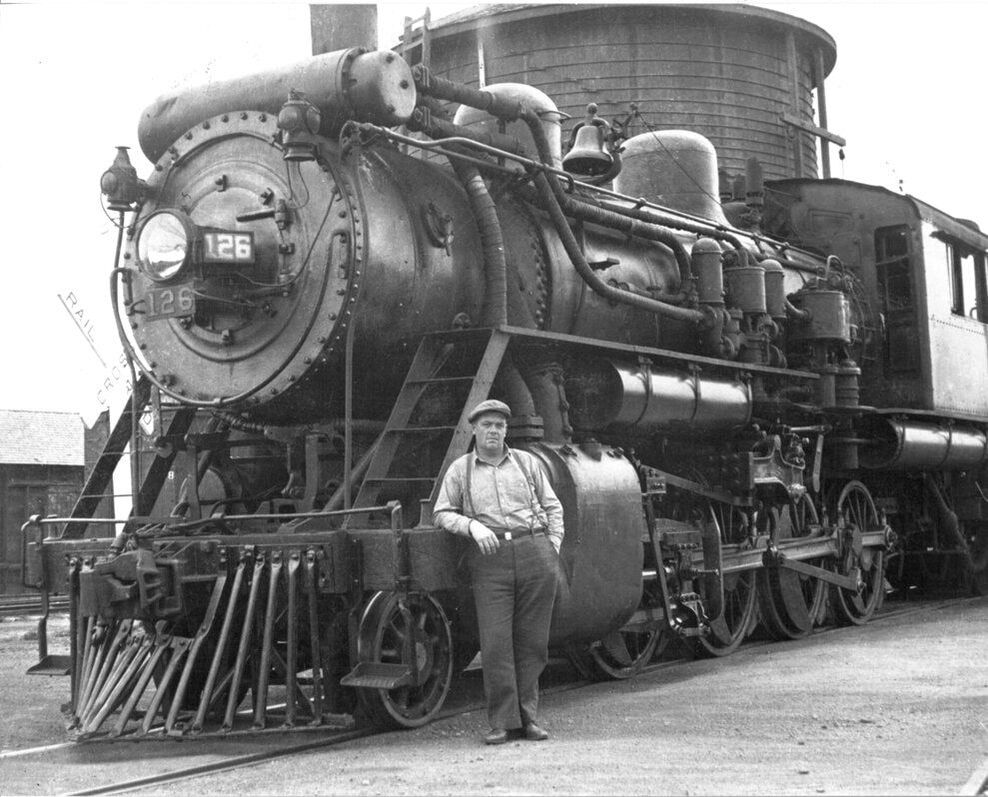
The new year in 1908 brought news that the Northern Pacific Railroad had agreed to purchase 14 acres from the Humbird Lumber Company on which to build their new division point. This news prompted T.J. Humbird, an owner of the Humbird Lumber Company mills at Kootenai and Sandpoint, to create the Kootenai Townsite Company. Lots and new homes began to be put on the market in the fall of 1908.

In 1910 the Northern Pacific completed it new roundhouse, car shop, and coal chute, and officially moved the division point from Trout Creek, Montana to Kootenai, Idaho. By this time the town had grown rapidly and had become an incorportated city. In 1910 the town could boast of having an active lumber, cedar pole, and railroad industry providing employment for hundreds of men and women. By that time Kootenai also had a bank, forty-room hotel, several stores, restaurant, brick school house, dance hall, two saloons, church, and streetcar terminal.

This Saturday, July 24, the city of Kootenai will be celebrating this milestone in their history with a day of activities for all ages. The festivities begin at 8:00 AM at Kootenai City Park at 200 Spokane Street. There will be an Injectors Car Club showcase, a pancake breakfast and barbeque lunch hosted by the Shriners, live music throughout the day, a self-guided walking tour of historic Kootenai, and a display of historical photographs.

Part of the walking tour will include a stop at the interpretive site installed by the Bonner County Historical Society earlier this year. The Society owns the site of the Northern Pacific’s car shops and stockyards. The interpretive panel shows many of the most historic places related to Kootenai’s past.

Download a schedule of events here.

Meet EHorn at the Spokane House Bicentennial fur trade encampmentThere are four history events coming up soon that we’ve just listed on the News & Events page.

Coming up this week are One Thing Certain: I Will Not Cry at the library in Sandpoint, Kittie Wilkins-Horse Queen Of Idaho at the Memorial Community Center in Hope, and Songs For The Journey To A New Life In Idaho at the Boundary County Museum in Bonners Ferry. In a couple of weeks, the Friends of Spokane House will be hosting their annual fur trade encampment at the Spokane House Interpretive Center.

Follow the News & Events tab at the top of the page or this link for more information.